Sunday, September 14, 2014

ROCA: Archbishop Andronik Arrives in Australia

ROCA: Announcement of the arrival of  Archbishop Andronik to Australia

Author: Vera nun incl. September 14, 2014. Posted in ROCOR (Views: 14)
Tags: australia , ROCA
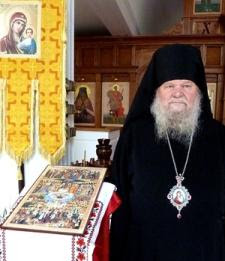
Archbishop-andronik.jpg
From  September  10-28, (n. article.) 2014 His Eminence Vladyka  Andronik, Archbishop of Canada and Syracuse,  USA, will visit the ROCA parishes in Australia. He has  scheduled services in the Annunciation Monastery, and in the Protection Parish,  and in the community of The Tabinskoy Mother of God.

Stickies


• Saudi Arabia, 'friend of America'?, their ongoing typical Islamic persecution (since False Prophet and False Messiah Muhammad walked this earth), of Christians-
  Note: Originally, St. John of Damascus, listed the twisted teachings of the false-prophet and false messiah, Muhammed, as a Christian heresy, that 'of the Godless Hagarenes'.
And, the 'God' [ Allah in Arabic] of Islam is not the true God, not our God, it was an adaption of an Arabian peninsula pagan, 'Moon god'  demonic idol], that Mohammed adapted  as, his 'God'.
  Remember too: It is Saudi Arabian enormous funding and orchestrating of many Islamic terrorists, who oppress and murder Christians, in many places in the world, [ really through the past centuries too] all done in full obedience to the 'peaceful and beautiful teachings of the holy Koran'.
Islam is truly 'submission' but to mankind hating, Satan, not God, not the real man-loving philanthropic  God...who loves mankind,  Who loves his fallen creation, and Who sent His Son, Jesus Christ,  to suffer and to die and to resurrect, for us, TO REDEEM US,  to show us the way to Heaven. Islam's 'god' hates us and wants for us, destruction in this world and the next.
  There is no genuine love in Islam, no forgiveness, only revenge and killing ones enemies.
  That Islamic god, his servants the Moslems, prove who they serve.


• Vladimir Putin...A Divine Personage?

A visit to ailing Swedish Vladyka Bishop John, in Stockholm, Sweden


*Humanly smoothed out, machine English translation.

  article found on: http://internetsobor.org

GOC Greek Synod:  Visit to Ailing Bishop John in Stockholm

Author: Vera nun incl. September 11, 2014. Posted in CPI Greece (Views: 13)
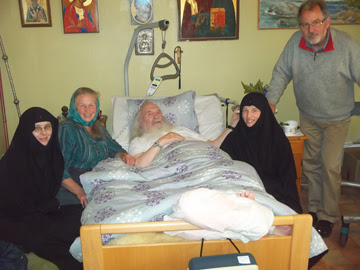
BildSeptember 6 (n. Article.) 2014  A Swedish family, the husband and wife Martina - the builders  of the chapel of St. Joseph the Betrothed , located not far from Uppsala - visited the sisters of St. Filofeevskogo monastery in Old Uppsala (in the Greek GOC Synod). This morning there was celebrated the Divine Liturgy by Fr. Anders. After the service, they all partook of a small monastic lunch. Martin then went to Stockholm to visit the Swedish Bishop John, who inspired this godly couple in the construction of the chapel of St. Joseph. 

Martina and her spouse had  last seen their  beloved Bishop in October, 2010, just a few days before Bishop John fell and broke his spine. Vladyka John at all times with humility,  endured all the hardships of his illness and never complained.

 100_2375
Bishop John has been  a very talented artist and a good teacher for many painters. And the latest icon in his life, he wrote with the image of St. Joseph the Betrothed. This icon along with many others, he hung on the walls of his room. It is an icon of St. Joseph that the bishop put in a  special visible place, so that you can easily see it from the bed.

The visitors  showed Vladyka John pictures of the  consecration of the St. Joseph chapel, and he was glad that now there is for St. Joseph,  his own small chapel, and for  for the worship of the saints of God, and that he, Vladyka John,  has a special relationship to it. Maria Martin relates  how this morning she prayed in the chapel on their farm in the forest, and then took a walk behind the temple, and all the sheep came running to see why she is there. They were  not used to seeing the mistress  of the farm, walking  behind the chapel ...
100_2378

Wednesday, September 10, 2014

One Study of the Old Rite

Link to the original Russian text of this article, found on:  <http://internetsobor.org>  
 http://internetsobor.org/arkhiv-rptcz/istoriia/rptcz/arkhiv-rptcz/episkop-daniil-osobennosti-dvukh-russkikh-bogosluzhebnykh-traditcii

Bishop Daniel: Features of the two Russian liturgical traditions

Author: Metropolitan Agafangel incl. September 10, 2014. Posted in Archive ROCA (Views: 43)

12/25 September 1974 at the III All-Diaspora Council at Holy Trinity Monastery in Jordanville were filmed at the old oath ceremonies. In practice, this confirmed the equivalence of the old and new rites, so that is no longer considered a sin to put in order of worship and follow the old rite. Unfortunately, the definition of the cathedral in 1666 put the whole science research old texts in an unpleasant and awkward position; professor of theological schools were afraid to go into some of the important areas of research on this topic. It is important to understand that the Russian Orthodox Church was condemned sin of schism committed by zealots of the old rites and ceremonies are not as such. In the Moscow Patriarchate, the situation is such that all are subject to the diocesan parishes edinovercheskie novoobryadcheskoy bishop (in practice a little concerned with the preservation of the national tradition of wealth), and the canonical Old Believer hierarchy questionable. Practically, these two hierarchies coexist in Russia without any communication. The situation is different in the Orthodox Church, where the Old Believers ordained a hierarch - Bishop Daniel of Erie. In fact it is the only canonical Old Believer bishop. In a hierarchical relationship is manifested in the fact that it reports directly to the First Hierarch of the Orthodox Church and is its vicar, but not at the level of the vicar of the diocesan bishop.
Hieromonk Andrew (Kostadis)


Introduction

When first considering the differences in the older (before the reforms of Patriarch Nikon) books from novopechatnyh, post-reform publications, primarily a striking difference of individual words and phrases. Upon further examination of such places is pretty much why the criticism of adherents of the old rite primarily boiled down to the assertion that the reform occurred defacing church books. This topic is really impossible to ignore, as if to look at the statutory side of the issue, it turns out that talking about the big differences between the old and the new rite - an exaggeration. When people talk about the different rites, they mean the service significantly different from one another, as can be found in the western rites, Jacobite, Coptic and others, but the old and new rites Riss are variations of the same Byzantine rite. When performing service both new and in the old rite in both cases follow the statute of Jerusalem, as it follows from nadpisaniya book Typikon. Modern Typikon translated in the seventeenth century. and, of course, includes the changes that have taken place in the in and for the district five minutes sko th liturgical practice since  n redyd gorge their  claim erevodov.  Pe ditches e ne r e water of old texts that wasps usche Stvilia Sts. Cyril and M ETF odi nd  and their teaching and ki, ascending t , as we know, to the works of IX  and n osleduyu soup h ek s. For example, say, just the way  Mr. otatsii c e p to s but of singing mutated in B and for n ti th tion they ne Rhee from  VII to X th V th centuries. several times, not to mention other developments in hymnography.

Our  ancestors of translating the word "Typicon" as a charter, and the literal meaning of the word "charter" is very close to the word "constitution". Realizing so Typikon as the basic law, the followers of the old rite jealous even of the smallest changes in the words of his Saviour: "until heaven and earth disappear, not united jot or one tittle shall not pass from the law until all is accomplished" (Matthew. 5 18). On the other hand, the church books spravschiki carried out their work with a focus on not Slavic, and Greek, and, on the date it samples without sufficient analysis and taking into account peculiarities of the Church Slavonic language. This orientation gave rise to accuse adherents of the old rite in ignorance and misunderstanding of the accumulated errors in the texts. Errors were really, really gave the text sometimes seductive nature and had to be corrected, but they do not occur from the ignorance of translators and copyists of missteps, so it would be better not to classify them as errors, but as clerical errors.

It should also be borne in mind that in the ancient Church-Slavic language was not strictly fixed spelling. Concept of uniform spelling appeared since the author of the first Church Slavonic grammar Meletius Smotritsky. He began to introduce workarounds spelling to designate similar forms, which are pronounced the same but have different meaning, for example:

 - Genitive, and   - the accusative case, it is now generally Church Slavonic orthography, and previously was not a strict rule.

However, significant differences between the statutory Typicon and modern "church eye" - is the title of incunabula Typikon - still not enough.

General Notes

Approach 1.  Underlying differences novoobryadcheskoy and Old Believers services is a fundamental difference in the approach to the service itself. In the new rite of the orientation of the faithful - the audience: the service is the clergy and choir (singers and readers), and lay listening to the service. The main element of the Old Believers' services - is the involvement of the faithful in the service: the uniform operation of all service members (from the clergy to the laity) under the control of the clergy and choir. As a result, the length of service does not deter believers - they have come to pray together, singing outwardly attractive and full service - activities. People actually take part in the joint, public service -  λειτος . Service continues for as long as is necessary under the statute, bows are made ​​together as a team, walking none. Teachings are usually saved as part of worship. Clergy teaches people after the divorce, then there is not an integral part of the service, which became later the practice, but rather an additional n less formal conversation the priest and the people.

 2 Books.  Oldritualist the service is conducted in early printed books, the version of the text which was in use until the reforms of the X VII century. In practice, used as a truly ancient books, and the Old Believers and edinovercheskie reprints with these books.

There are two main reasons for the differences in older and novopechatnyh texts:

a) The difference between the originals (originals), with which the translations were made. Lyrics old model was launched Sts. S Cyril and Methodius on samples  VII - VIII  centuries. novopechatnye and transfers made ​​on samples of the XVII century., mostly Venetian edition. This has already been discussed above in connection with the transfer Typikon.

b) the difference between the transfers. Church Slavic language times Sts. Cyril and Methodius profit close to the spoken Slavic language. In the X VII  century. translators could no longer be a "natural sense" of the language - Church Slavic language was already only liturgical, dead in the sense of its colloquial use.

3 Singing.  In the old rite is used solely Znamenny chant in its purest form. Used singing books containing Krukovs notation. In addition, used singing by ear, abbreviated and modified - "on napevke" different places of the banner. Occasionally used "demestvennogo" and "track" singing - a lingering, solemn melody. Have recorded versions of this song, which differ somewhat from those of particular signs and hook system notation. It is known that in ancient times was used is still "a string singing" but "dvuhstrochnikam" and "trehstrochnikam" - now it is not used and is a rarity. This is distinct from polyphony adopted modern European harmony.

Banner was the official song singing Riss Church until the revolution. All official motet editions of St.. Synod contained mainly Znamenny chant with small additions of Kiev and Greek chant. You can bring indirect evidence that partes singing finally replaced znamenny only in the XX century. and not elevated to a fixed pattern, and four-part choirs were rare and found only in large cities. In one of the stories of Saltykov-Shchedrin (1826-1889 gg.) Referred to as a gentleman decided to go into town and wanted to hear there partes and singing. But the chorus went, and he had to "listen to the deacons," ie Znamenny chant. It is also known that the Metropolitan Filaret (Drozdov, 1783-1867 gg.) Was opposed to the introduction of worship partesnogo singing.

On the languages ​​of Church Slavonic and Russian

Printed books, as well as novopechatnye, written in Old Church Slavonic, the language close to modern spoken to him at the time the Slavic languages. Linguistically Slavic and Russian - are two different languages. Slavic language almost 1,000 years older than the Riss and has its own special grammar: syntax and morphology. Riss literary language was formed only by the beginning of X VIII  century. Prior to this, all the official documents in Russia was conducted in the Slavonic language, which has been influenced by Riss language profit they eventually replaced under Peter I. Now, if we compare the Church-Slavic language with Russian, it appears that the Church-Slavic language independent and independent, and the Russian just do not think without the Church Slavonic. The main difference consist in the fact that the Church-Slavic language has grown and belongs to the group of South Slavic languages ​​(together with the Serbian and Bulgarian), and the Russian language - refers to the East Slavic languages. Next, the Russian language has undergone the influence of the Church Slavonic and Church Slavic remained independent and preserved in the church use, though even in early printed books, there are individual light Russianisms.

EXAMPLE I

King James translation of the Lord's Prayer: "Our Father who art in heaven ...".

Church Slavic text: "Our Father, Who art in heaven ..." "Father" - stands in the vocative case, which is in the Russian language does not have; "Ilk" and "Thou" - these words in the Russian language does not have; "Heavens" - the Russian version, "heaven"; "Mere" - sounds like the word Church Slavonic, but in the Church Slavonic language, this word would be "sy".

EXAMPLE  II

Church Slavic: "Lord have mercy"; Lord - vocative.

Russian language: we say, "Lord have mercy" did not hesitate to borrow the word "God" from the Church Slavonic, while correct in Russian would have to be, "Lord have mercy."

EXAMPLE III

Church Slavic: "Lord God" - both words are in the vocative case.

In Russian, without these archaisms, would have to be the "Lord God."

EXAMPLE IV

Instead Slavic "pervoierarse" sometimes found easy Russism "First Hierarch" etc.

Old Believers taken a slightly different pronunciation.  Glagol  "g" is pronounced in the Church Slavonic language in the South-Russian style, with a gasp, "gykaya" like the Latin letter " H ". The letter  is   pronounced as Russian "e", especially preserved in the northern bezpopovtsev-pomortsev. The same letter, and another to write it   pronounced Russian "e" at the beginning of words and after vowels. Letter  yat   pronznositsya kak "e" with a strong softening of the previous consonant, eg   pronounced in Russian as "mne", and   as "mene".

Ancient translations are not as literal as the later. Greater closeness translations X VII  century. the Greek has led to the fact that some of the translations made ​​in violation of the rules of the Slavic language.

EXAMPLE I

Later, a modern translation: "May the Lord save thy people and bless thine inheritance" - a literal translation from the original Greek.

More ancient, old translation: "May the Lord save His people, and bless His property" - is made by the laws of the Slavic language, not blindly copying the Greek original.

EXAMPLE  II

"Thou art the Christ is risen No man but does not believe ..." (Sunday Svetilen) - a new translation done was literally from the Greek, where there is a double negative statement.

Early printed version, "Thou art Christ is risen No man did not unbelievers ..." etc.

Differences statutory

As already mentioned, there is almost no difference. The main differences in the application of the statute. The desire to perform exactly the charter preserved and adherents of the old rite. On the other hand, the old charter was created without the idea of ​​the need complete uniformity. Furthermore, all manuscripts differ slightly. The idea came after uniformity and partly resulted from the introduction of printing. In the old books so often are several options statute without specifying which one is preferable. These places are known and in novopechatnyh books when there are indications of the type: "yn statute ..." or "in the Greek monasteries revere ..." etc. The followers of the new rite has developed its own practice, which is close, but still more different from the instructions Typikon than the Old Believers. Because of differences "on Typicon" is really small, mainly should not talk about the differences "on Typicon", and the difference ritual, from which has developed the distinction of names: new and old rite rite rite proper understanding by liturgical practice.

The main difference - singing: harmonic singing completely replaced znamenny singing in the new rite.

Length of service: if the service takes longer than the Old Believers, it happens from better compliance with the Charter and from reading the teachings. However, there are services that are in the old rite is shorter than in the new rite.

Initial prayer

- In the new rite: "The cry of the priest. Glory to Thee, our God, glory to Thee. O Heavenly King ... ".

- In the old rite (except Matins and Midnight): "The cry. O Heavenly King ... "

Old Believers Matins: "Whoop. Holy God ... "

Old Believers 'Midnight' Whoop. Glory to Thee, our God, glory to Thee for every (3 times). Prayer: O God, cleanse me a sinner ... with 3 bows. O Heavenly King ... "In the old rite of the 9th hour reading taken after the 3rd and 6th hours during Proskomedia a new rite, this practice is much rarer.

In the old rite no service does not start without the so-called "pay-start" (also called "semipoklonnym beginning"):

- God be merciful to me a sinner. Bow.
- Creating me, O Lord, have mercy on me. Bow.
- No number I have sinned, O Lord, have mercy and forgive me, a sinner. Bow.
- It is truly meet ... (Prostration).
- Thank ... (Bow).
- And now ... (Bow).
- Lord, have mercy, Lord have mercy, Lord bless.
- Dismissal. (When the priest makes the dismissal and bowed to the people standing in the church in response to the same bow to no sign of the cross).

At the end of each service to read "Initial Start" (otherwise referred to as "the original bows") that mimic the "pay-in the beginning." Sometimes added a few nods to the Jesus Prayer. Of these "volunteer" is mentioned already in holy. Joseph of Volokolamsk (1439 or 1440-1515 gg.), And in ancient times it was, apparently, private prayer, gradually passed into liturgical practice.

The special features of the ancient practice must also include the fact that the number of prayers nadpisanii does not require that the text of all prayers were completely identical to each other. It came to our days. For example, we say, "Come let us worship, three times," but every single phrase is slightly different from the other. The same can be seen in the case of prayers prep. Ephrem the Syrian: in the place where, according to the new rite read 12 of the same prayers, "God, cleanse us, a sinner" with "methane" in the old rite read different short prayer, but the total number of states 12.

By Sunday Vespers on Typicon can be performed separately from matins. Generally vespers service in the old days were more rare. In the old rite at Sunday Vespers, even if it is done separately from the morning, there is lithium which she sings all the verses for which there was no place in other parts of the service (for example, missing from a holiday or missed Small Vespers). On Sunday morning always 17th Kathisma - Immaculate. As you know, in the winter should be added polyeleos psalms "Praise the name of the Lord ..." In this case, the order polyeleos this:

- Immaculate, troparia on the upright polyeleos, magnification, if it exists.

In practice it is often skipped novoobryadcheskoy blameless and select psalm, from which we obtain:

- Polyelaion, magnification once, without poetry favorite psalm troparia on the upright (without themselves blameless).

In the old rite in practice kept reading patristic teachings. In the new rite of reading were only in the days of Lent in the monasteries. These teachings in the old rite read special chant: "Stateyny poglasitsa." Room to Read:

1 before the Six Psalms at the vigil.
2, and 3 after sedalions on Kathisma;
4 after polyeleos;
5, 6 at the III and VI of the canon of songs.
In practice, not all are read, and 3 or 4 teaching.

In the old rite is no practice to skip kathisma:

In the old rite troparia on God is the Lord (indulgence) is not usually sung and sung only ends troparia the corresponding voice. Actually troparnyh voices singing in the verses there, and chants of "Greek singing" strictly speaking Greek singing have little in common. In the old rite sung troparion before the blessing of breads on the vigil and at the entrance of the liturgy. But their motives are not the oldest, it can be assumed that they began to sing, to give more time to burn incense to the clergy. (In the Old Believers practice in accordance with the strict execution of the statute immediately after lithium clergy enters the altar, and then separate the priest goes to the blessing of the loaves).

In the old rite preserved the general order of singing psalms (Proemial, "Blessed is the man", "Lord I cry" and all the Kathisma at Matins)

- Canonarch proclaims the initial verse;
- Golovschik (sang) the right choir sings the same verse with the refrain;
- Canonarch proclaims the following verse;
- All right choir repeats this verse with the refrain;
further - canonarch;
- Left the choir,
- Canonarch;
- Right choir (alternately) ...

In practice singing without waiting canonarch and canonarch proofread the entire psalm, it turns out a kind of reduction.

In the old rite before the liturgy is always accomplished condensed obednitsy. If the liturgy put antiphons, psalms 102 and then 135 is deducted on obednitsy in accordance with the common desire to miss nothing.

In the liturgy is not sung chant "We have seen the true light ..." (borrowed from the service of Pentecost as the "Heavenly King").

When vespers done separately from Matins, the dismissal is slightly different from the dismissal of Matins.

Heirmos and mayhem canons sung all but strictly Typicon: twice, four times, etc. Comply with the provisions troparia number (usually 14). In addition, each heirmos in znamenny chant has its own melody.

Conclusion

The above examples illustrate the differences fundamental similarity of old and new rites. Church practice of worship always changes a little, but when these changes took place naturally, slowly, over the centuries, the old moribund, and instilled a new painless. Sharp as breaking secular foundations led to the emergence of dissenters.

In addition, you can give a few other examples of changes in liturgical practice, which can be traced in the study of early printed books.

Exclamation: "Through the prayers of our Holy Lord ..." The story is as follows. According to the old books can be traced that cry "For the prayers of our holy fathers ..." on the clock had to submit a bishop. Gradually, in the absence of the bishop, and later in his presence, to proclaim this exclamation became priests. Especially on services in nekafedralnyh churches, but in the presence of the bishop or bishops' chairs and monasteries with the constant presence of the bishop.

Similarly, in an appropriate and where it was possible, the harmonic treatment of the ordinary use of conventional moved into the category of some "exotic" elements of liturgical singing. In ancient times, a similar element was not so much a holiday as everyday life.

A few words about the morning and evening prayers. In the old books say that "If ye proizvolyaet someone from the mobile monk" to add to his usual rule ... and then recorded those prayers, which are now incorporated into the evening prayers. At midnight office also has two prayers that are included later in the morning prayers, but, strictly speaking, a single rank of morning and evening prayers in the old books do not. Thus, the use of the ancient prayers evolved a course of time from what was previously not required and was done but only request a voluntary believer in something recommended for daily execution.

Jesus' prayer before mattered replace rule for the illiterate, but over time their use of old has changed and developed them to a different attitude. Of course, the number of such examples can be replenished.

Written from the words of His Grace Bishop Daniel of Erie, priest Andrei (Kostadis) in the month of August 1996 in Churaevka  Southbury , Connecticut.

Orthodox Russia, 1996, №21

Comments   

# RE: Bishop Daniel: Features two Russian liturgical traditions - monk Nicander 10/09/2014 15:42
Sorry did not explain about the "century, and forever," and about the armpit pads, about "hesychast" hands folded on his chest, about two additives in the Creed, about "Khomov" singing and so on. "Antiquity".


# RE: Bishop Daniel: Features two Russian liturgical traditions - Archpriest Eugene 10/09/2014 15:14
Good article.
pity that Daniel Masters no longer with us, and by recording with him, no longer monk unfortunately ...
How quickly passes our earthly existence ...


# RE: Bishop Daniel: Features two Russian liturgical tradition - Vladimir 09.10.2014 12:37
Service-clear, and you can not pay attention to the baptism of two fingers and a procession in a clockwise direction. You can take them and the saints (as Boyar Morozova), but to give up their famous church after the split .... and do not recognize the Old Believers (St. Seraphim of Sarov, St. John of Kronstadt, etc) it is already too


# RE: Bishop Daniel: Features two Russian liturgical traditions - monk Nicander 10/09/2014 15:38
What do you mean "you can take them saints," You have any idea what kind of fierce scornful men were Morozov Abakum, Nikita, Theodore, and so on. crazy and seduced?


Tuesday, September 9, 2014

Stickies

• Tzar Putin crowned (see photos)

• The big picture, an overview- Putin is playing a giant game of chicken
 Sep. 09, 2014 - 3:15 - Fox News national security analyst on Russian president's objective

• The Putin military attack he is planning on America, just one more recent piece of evidence

• Esphigmenou (images only, no narration)  4 minutes

Monday, September 8, 2014

Reverentially, the MP Commemorates Nikodim Rotov

http://internetsobor.org/moskovskaia-patriarkhiia/tcerkovnye-novosti/world-orthodoxy/moskovskaia-patriarkhiia/v-moskovskoi-patriarkhii-pochtili-pamiat-mitropolita-nikodima-rotova


MP-''Metropolitan Nikodim",  Rotov, Remembered, with full honors,  by the Moscow Patriarchate-

with all of this great honor and high respect, for betrayer of the Orthodox faith, on behalf of  both his own KGB masters and to the Pope of Rome, [ and who shamefully died in communion with the Pope, and  at his feet] , 'Metropolitan' Nikodim Rotov, OF THRICE SORRY MEMORY.

Among his great achievements for the Kremlin, was his major part in engineering, ( over a ten year secret negotiation process, in the dark and behind closed doors], with priest Alexander Schmemann and the heads of the schismatic  Metropolia, [ now renamed as' The Orthodox Church in America' ] the 1970 betrayal of the North American  (Russian) Metropolia, to the communist controlled and run MP, in that 'autocephaly' submission, a great feat for the communists.

If the Russian communists could have  their communist... 'saints' ...then Nikodim Rotov certainly is one. But to recognize Nikodim Rotov, as...an Orthodox  real saint???...hardly!
He was the supreme Sergianist, at best, and a super betrayer of the faith. That is his true and pathetic legacy, forever.
Rd. Daniel

Humanly smoothed out, from the machine English translation:

 In the Moscow Patriarchate commemorated Metropolitan Nicodemus (Rotova)
Author: Vera nun incl. September 8, 2014. Published in the Moscow Patriarchate (Views: 8)
September 5, 2014,On  the memorial day of  the death of  the biggest modernist ecumenist  hierarch of the MP-Russian Church  Metropolitan. Nicodemus (Rotova)  in the Trinity Cathedral of the Alexander Nevsky Monastery, hierarchs of the Russian Orthodox Church/MP celebrated the Divine Liturgy and funeral service.

At the altar of the Cathedral, there prayed Metropolitan of St. Petersburg and Ladoga, Varsonofy,. Metropolitan Juvenaly of Kurtitskomu and Kolomna, concelebrated by Metropolitan of Novgorod and Velikoluksky, Leo, and Archbishop. of Berlin and Germany, Theophane, and the rector of the St. Petersburg Orthodox Theological Academy, Archbishop of  Peterhof,  Ambrose, and the Bishop of Vyborg and Priozersky, Ignatius, and Bishop of Tsarskoye Selo, Marcellus,and the  Bishop of Kronstadt, Nazariy, and the  Bishop of Tikhvin and Lodeinopolskiy, Mstislav, and the  Bishop of Gatchina and Luga, Mitrophan, and the Bishop of Borovichsky and Pestovskij, Ephraim;  and Archpriest Paul Krasnotsvetov, rector of the Kazan Cathedral, and Archpriest Alexander, Associate Professor SPbPDA. Also there were  early guests and monks of the Alexander Nevsky Monastery in holy orders. The  diaconal rank was headed by  Archdeacon Andrei Levine.

During the service, a male choir was singing from the Theological Academy, directed by  Hieromonk Matthew (Sharov) and a special choir of the monastery under the direction of A. Tursunov.

At the memorial litany there was  commemoration  of him who died 36 years ago, Met. Nicodemus(Rotov)..
At the end of the memorial service, all participants in this worship, held a  religious procession  to the  Nikolsky monastery cemetery. Traditionally, 'Many Years' was sung and at the end of the prayer of remembrance, the  choir sang the Kontakion of the feast of the Assumption of the Blessed Virgin and the Sessional hymn "The apostles came from the ends of the earth."

In the refectory of the Lavra there was hosted a memorial meal, of which those gathered, shared their memories of the late Met. Nikodim,  and repeatedly sang "Eternal Memory".


Source

Comments   

# In America, in the OCA- - Rd. Daniel 9/8/2014 7:05 p.m.
They also highly respect the memory of Nikodim Rotov, and also of every MP other 'patriarch' and Bishop.
To These foolish OCA Ignorant Americans here, They will believe anything that the MP, their 'Mother church' Tells Them,
It is as if they all are permanently sleeping.
One of Their OCA Bishops, of Los Angeles, [ retired] Bp. Tikhon Fitzgerald recently told me
in an email, he speaking about all of these MP higher clergy, referring to them all,  Including Nikodim Rotov, as ' OF Blessed Memory ". I could not believe hIm, but  he was .. serious ,,. sadly .  What ignorance, what apostasy.
Rd. Daniel

Sunday, September 7, 2014

An Exposé of the vigante Milan synod and some of its true history

from the Russian language article, found on Portal Credo.ru

This current rendition [their ever changing, ever metamorphosising uncanonical and utterly un-Orthodox  concocted jurisdiction] of this vagante bogus Western Rite, 'Milan Synod' needs for us to know its true bizarre roots and unbelievable  un-Orthodox history.

All true Orthodox need to avoid this group, and its main internet electronic mouthpiece, Joseph Suaiden's blog, a jumble of half-truths and lies, NFTU, which pretends to be bringing all of us, 'fragments' together (!)

Yet. Mr. Suaiden's  constant underlying theme is to belittle and denigrate our Met. Agafangel and our ROCA and our sister churches.

Here is much of their convoluted and weird history and roots:
Rd. Daniel...sharing this, solely for TRUTH'S sake, not at all to further any useless inter-jurisdictional arguments.... which is the stuff that Mr. 'Deacon' Joseph  Suaiden loves to engage in.


• This is the first knowledgeable & fuller description & accurate history of the vagante Milan synod and its sundry current adherents, [still active today, and still attacking our ROCA].   

   A profound investigation of the  nonsense of the 'Western Rite', of their connection to the revivified Latin heresy, from the mold of the centuries  'Name-Worshipping Heresy',  – AND among other valuable pieces of information, an absolute rebuttal of many of these bizarre people, which  among their various bogus claims: that Met. Philaret knew of them and blessed them, etc...i.e. that they have had a solid canonical connection to ROCOR, etc. 

   Here is also given the western, Roman Catholic roots of this Name-Worshipping heresy,
which heresy the Milan Synod has rightly recently condemned, but one wonders why..
  
Could this righteous sounding condemnation of this long ago prohibited heresy, both in  the Catholic west and in our Orthodox church,  be for show purposes..i.e. to make themselves  look very soundly Orthodox?...when they are not, in so many other fundamental ways?
  

– Reader Daniel


Portal Credo.ru article on 'Milan Synod' history
(Non-professional translation kindly provided by Vladimir Djambov) 


Newsline[  RSS | News Archive  ]
September 5, 2014, 19:58Print

THOUGHT: Father Alexander Pavpertov.  To Make Oneself a Name by rebelling against the Name of God...


Among the ecclesiastical events of this past year, standing out, no doubt, was the statement  by the hitherto virtually unknown to the Orthodox world, Metropolitan of New York, John (LoBue) (John LoBue) on the commencement of his "crusade" against the [heretics] Orthodox Name of God worshipers.  On August 4, this statement was been confirmed by an official decree of The Autonomous Orthodox Metropolia of North and South America and the British Isles, that he heads, wherein the Orthodox veneration of the Name of God as Divine Energy, has been declared a heresy, and all who follow such a teaching, are (to be) excommunicated from holy communion and ecclesial communicaton.  At that, Metropolitan John referred to recommendations, allegedly given to him in 1978 by Saint Filaret (Voznesensky), Metropolitan of  New York, (the then) First Hierarch of the ROCOR, and by Protopresbyter George Grabbe.


Undoubtedly, such a statement on behalf of the dwarfish “Western Rite” jurisdiction, whose number of parishioners has in recent years grown so much that it almost approached the current number of its clergy, could not but raise some questions.  What is the origin of that group and (what is) the history of its relations with the ROCOR?  After all, it is not the first time Metropolitan John refers to the authoritative opinion of two venerable ROCOR hierarchs, in confirmation of his assessment of Name-worshipping as utterly negative and blasphemous.


The community led by Metropolitan John is known to the world to a narrow circle of specialists in religious studies, and even that only because entering in communion with them a few years ago was the GOC (R) under the omofor of Metropolitan Raphail (Prokopev-Motovilov).  In the United States, however, it turned out that they know a little more about this community – but generally not because of its spiritual ministry, but thanks to the NFTU Internet portal, owned by a Deacon of Metropolitan John’s – the bigamist Joseph Suaiden (whose real family name is Mohamond).  While he was in ROAC he left a family with four children and then married a ROCA parishioner with three children;  and she who for the sake of this (2nd marriage) left (in turn) her 1st husband and her 1st church marriage.  A case, as this case of Joseph Suaiden, generally makes him not (suitable) for the diaconate.


So our readers may judge for themselves how much one could trust the referrals by Metropolitan John to  a certain opinion of St. Philaret and (of) Bishop Gregory (Grabbe), which suddenly opened up [has revealed itself] after 36 years of being kept in total silence, we offer to get acquainted in greater detail with our hero and his jurisdiction.

Bishop Vagant William Henry Francis Brothers 
Photo [Bishop William Henry Francis Vagante Brazerz]

Ironical as this may be, this jurisdiction which refers [connects] itself to Genuine [True] Orthodoxy, has as a source of its origin the independent Benedictine Congregation, led by the old-Catholic Vagante bishop William Henry Francis Brothers.  He is well known within the "left" political sector of the United States for his pro-active cooperation with the Catholic Labor Movement and (also) thanks to the assistance of his abbey of St. Dunstan, he  provided help to the holding of the hippies’ festivals in Woodstock.  Ordained a bishop in 1934 in New York by the bishops Theophan (Noli) [the Albanian Orthodox bishop] and Christopher (Kontogeorge), Brothers created his “The Old-Catholic Church in America – The Western Orthodox Catholic Church in America”.


Bishop William Brothers crowned two barefoot hippie nature in Woodstock

Photo [Bishop William Brothers wed-crowned two barefoot hippies out in the nature in Woodstock] 

After Brothers was defrocked in 1944 by the National Old-Catholic Church in America for schism and co-liturgizing with Monophysites, in 1962 he was adopted “in the [same] existing rank”, together with his Benedictine monastic communities by the Moscow Patriarchate Bishop of Brooklyn Dositheus (Ivanchenko).  A condition for Brothers’ communities entering the ROC MP was the mandatory preservation on their part of the Western Rite in liturgy and – initially – [also] the opportunity to litgurgize using the Gregorian calendar.  For liturgical purposes they were availed the use of a chapel at the [MP] St. Nicholas Cathedral Church in New York.


But soon Brothers faced the persistent appeals by the Moscow Patriarchate to come [over] to Moscow for re-ordination.  He regarded [judged] these to be attempts by KGB agents to recruit him, and two years later he broke off relations with the ROC MP, joining the Ukrainian refugee Metropolitan Palladium (Vidybida-Rudenko). 

However, he retained the right to perform liturgies in the Western Rite and formed within the “UAOC in exile” a certain autonomous church structure with the name “The Synod of Orthodox Bishops of the Western Rite”.  At that time the UAOC-E created by Metropolitan Palladium together with Archbishop Igor (Guba) not only was in communion with the new calendarist Ecumenical Patriarchate of Constantinople (on the territorial rights of its Ukrainian Exarchate in America), but also became the initiator of the setting up in the United States in 1960 of  (SCOBA) – Ecumenical Conference of Canonical Orthodox Bishops in America.


It is here that we first find mention of the Jesuit expelled from his Order, John LoBue in his capacity of a resident monk – then of the Benedictine old-Catholic abbey of St. Dunstan of Canterbury and a spiritual son of 'Metropolitan' Brothers who had received his title from UAOC-E.  Unfortunately, neither the Metropolitan William Brothers, nor his monastic fraternity were not in the least embarrased either with the new-calendaristness and the ecumenism of their new Patriarch Athenagoras, nor with the fact that in 1965 he announced on behalf of the entire Orthodox Church, the cancellation of the patristic anathemas on Latinism, and entered communion with Rome.


On April 14, 1966, metropolitans Palladium and William Brothers ordained as a bishop of the Western Rite for San Francisco, Joseph (McCormack) (Joseph A. McCormack).  After the death of  Archbishop Palladium in 1969 among the Benedictine oblatur [dependencies] of Metropolitan Brothers there started discontent, which in 1971 formed into an open schism.  The more conservatively disposed part of the brethren [monks], helmed by the then abbot Augustine (Whitfield) (Dom Augustine Whitfield) of the St. Dunstan monastery (which after the fire had moved from Woodstock to Overlow Mountain), insisted on a complete break-away from Constantinople and on accession of the Western Rite communities into the ROCOR Synod.  Archbishop Joseph, in his turn, wanted to preserve the status quo.   Then McCormack and Brothers gave up communion with Constantinople, but actually became isolated from the UAOC-E, as well, existing autonomously ever since – as “the Synod of the Orthodox Bishops of the Western Rite.”   But, only a year later, in 1972, within that community there was a split, which resulted in most of the Benedictine monks following the abbot Augustine and leaving the abbey of St. Dunstan and settling in the monastery of the Assumption of the Blessed Theotokos “Mount Royal” (Mount Royal, Jacksonville, Florida), where in 1975 they converted to Orthodoxy and went over into  ROCOR under the omophorion of the Archbishop of Washington, Nikon (Rklitsky).


But John LoBue did not go along with them into the ROCOR.  In that conflict, the Brotherhood of St. Dunstan sided with Archbishop Joseph (McCormack) and abandoned the appellation, “Catholic.”

In 1973, with the blessing by Metropolitan William Brothers, the brotherhood elected as its new abbot, the monk John (LoBue).  He transferred the monastery to a new location – to West Milford (West Milford, New Jersey).  That same year, “the Synod of Bishops of the Orthodox Western Rite” came into communion with one of the independent Old-Catholic Vagante bishops, Robert Williams (Robert Lloyd Williams), ordained by William Daw (William Daw) in 1972.  In 1977, Brothers and Joseph re- ordained him with the name of Hilarion for the Archdiocese of Texas, where he had a small monastery of St. Hilarion in Austin.

The Abbot John Lo Beau at the Abbey of St. Dunstan of Canterbury

Photo [The Abbot John Lo Bue at the Abbey of St. Dunstan of Canterbury] 


In 1978,  abbot John (LoBue) after failed attempts to enter into communion with any Orthodox jurisdiction that has apostolic succession of its ordinations, renamed his Abbey of St. Dunstan, which was then [is now?] housing the administrative and publishing centers of his grouping, into the Abbey of the Holy Name.  It was then that there arose disorganizations because of its relationship with the Greek GOC(-s) and because of the experiments that ended in a failure with the “Western Rite” communities in America and Europe.  Therefore, the ROCOR Synod categorically prohibited with a decision of its, the “Western Rite”, [that they] no longer accepted [any] community and Western Rite clergy and refused to negotiate with those in the future.


In the “Definition of the Council of Bishops of the Russian Orthodox Church Outside Russia of 5/18 September 1978 on the so-called Western Rite” in this occasion the following was stated:  “Resolved: The Western rite in its present form was introduced after the falling away of the West from Orthodoxy and does not accord with the liturgical life of the Orthodox Church, established in the course of many centuries. It does not reflect Her liturgical tradition. Therefore, it does not satisfy those accepting Orthodoxy when they grow more deeply accustomed to it, and it had success nowhere. Due to the foregoing, the Council of Bishops does not recognize it possible to allow the Western Rite into the Russian Church” (“Holy Russia” [Православная Русь], 1978. #21. p. 5. Reprinted after the text: “Law [Jurisdiction] of the Russian Orthodox Church Outside of Russia. 1921-2007”, D. P. Anashkin comp.[Moscow] PSTGU, 2013).

Archimandrite Augustine (Whitfield) with his Monastery in Mount Royal proved to be the only priest, [in ROCOR] for whom – as an exception – the right was granted to conduct liturgies by the order of the pre-Trident Latin rite.  This remained so until 1993 when the ROCOR bishop Hilarion of Australia and New Zealand (Kapral) adopted [into ROCOR] Fr. James (Desten) with the Christminster Monastery.

In 1979, Metropolitan William Brothers died and the “Synod of Bishops of the Western Rite" he created ventured into “all the heavy” [experiences?], [by] entering into communion with the infamous [for the numerous scandals and criminal prosecutions for moral crimes] of, The “Vasilupolsky Missionary Archdiocese” led by Pancratios (Vrionis), a former EP New Calendar American Greek Archdiocese defrocked, priest) residing in Queens, New York. 

On September 21st, 1980  abbot John (LoBue) was ordained by Metropolitan Joseph (McCormack) and Archbishop Hilarion (Williams) a Bishop of New York, and “The Synod of Bishops of the Orthodox Western Rite” was finally formed in the form under which it is now known to students of religion.


After the death in 1990 of Metropolitan Joseph (McCormack), through whom “The Synod of Bishops of the Western Rite” had managed to maintain good relations with several independent Ukrainian parishes, remaining after the collapse of UAOC-E (where they had been allowed to co-serve), and the French Western-Rite community of bishop Herman [Germain] of Paris (ECOF), Metropolitan John and Hilarion did actually remain on their own.   It was so not until 1997, when they managed by repeated (already third in their lifetime) ordination to all the holy ranks to be accepted under the omophorion of the Milan Synod of Metropolitan Eulogius (Hessler).  That Synod was at that time in communion with the Ecumenical Patriarche of Kiev, headed by Vladimir (Romaniuk).


The then newly-ordained, according to the Orthodox rite, bishops John and Hilarion, could position themselves in America and Canada as representatives already of the Genuine Orthodox Church.  It was here for the first time (in 1997, and not at all in 1978, as it is represented according to the LoBue version!) that we come across the self-calling of that exotic community as a Genuine Orthodox Church.  Not later, and not earlier.


Bishops Hilarion and John arranged for themselves two Archdioceses – the “Archdiocese of Texas and the West of the United States” and the “Archbishop of New York, New Jersey and all the Eastern States”.  The bishops took the titles of archbishops and created the so-called “American Provincial Synod”; and elected as its chairman was the Archbishop of Texas, Hilarion (Williams).

On 14/27 February 2011 the two American dioceses of the Milan Synod were granted autonomy, and they were transformed into a community with its current name – “The Autonomous Orthodox Metropolia of North and South America and the British Isles.”  Archbishop John (LoBue) became the Primate of the Archdiocese, endowed with the title of “Metropolitan of North and South America and the British Isles” and [with] the right to wear a white hood.  Immediately upon receipt of formal autonomy, on 9/22 March 2011, the communication between the Milan Synod and the American Metropolia has been severed [disconnected].  At that, the ones who had just nominally become Orthodox bishops immediately proved “holier than the Pope” and immediately accused the bishops of the Synod of Milan who ordained them in ecumenism, because of which they instantly seceded from..as 'deposed'.

Let us make an interim conclusion of our little historical excursus [perspective].  As is known, St. Metropolitan Philaret (Voznesensky) was the chairman of the ROCOR Synod between 27 May 1964 and 21 November 1985.  The Former Roman-Catholic abbot John (LoBue) became the abbot of the Abbey of St. Dunstan (that he renamed in 1978 [as] the Abbey of the Holy Name) in the 1973 year, and he was never a clergy of the ROCOR.   Throughout his life in the abbey he served only by the Western Rite (and at first – also after the new Papist style [calendar]).  In 1978, the ROCOR Synod declared inadmissible in its decision the use of the Western Rite, and up [all the time] until 1993, it did not accept into communion priests of the Western Rite. St. Filaret and Bishop Gregory (Grabbe) never visited the Abbey of the Holy Name.  It was visited only by Bishop Hilarion (Kapral), but that was well after the death of Metropolitan Filaret, in 1992 or in 1993, after the acceptance of Fr. James Desten of Cristminster, as well as [visited?] by Metropolitan Herman of Paris.


Question: where, when and in what manner could St. Philaret of New York or Protopresbyter George Grabbe, who – according to the witness of still living contemporaries of theirs – never even privately raised the issue of Name worshipping, officially advise a certain canonically dubious Western Rite bishop to support one another on the issue of worshipping the Name of God of 'the lawless decree of the Russian Synod of 1913'?  And why on this issue did the allegedly being in their council, Metropolitan John (Lo Bue) keep silent for full 36 years?  He kept silent until the prevailing conditions prompted him – in the wake of theologically illiterate Name-worshipping-machist statements by Bishop Demetrius (Kiriakou) – the easiest possible way to present oneself into the market of idling American Vagante bishops of indefinite denominations [religion].


I was personally acquainted with the late daughter and personal secretary to Bishop Gregory (Grabbe) - Countess A. G. Shatilova-Grabbe – and for many years maintained correspondence with her, cooperating in the publication of the “Church News” anthology.  And so, despite the fact that Bishop Gregory and all his family deeply venerated the memory of their Abba – Metropolitan Anthony (Khrapovitsky), and indeed Anastasia Georgievna herself treated the Name-worshipping [heresy] far from a very friendly way, she [nowhere and] never ever said that this issue was at all discussed within the ROCOR.  On the contrary, taking into account, judging by the indirect evidence of close relatives, [to the effect] that Metropolitan Anthony himself towards the end of his life did largely revise his erroneous views of the early XX century, – an unspoken “taboo” was imposed upon discussions on this topic in the ROCOR.  Which [fact] is also confirmed by the delicate side-stepping of this issue by Archbishop Nikon (Rklitsky) in his multi-volume “Life of Metropolitan Anthony,” and the personal recent evidence to myself by ROCOR priests in response to my bewilderment with the recent Name-worshipping statements of Metropolitan John (Lo Bue).  So I’ll dare put to doubt, the alleged, 'fact', that Metropolitan Filaret or Bishop Gregory had in fact EVER... spoken to Metropolitan John those supposed  quoted words of Met. Philaret, exactly are, what he has [now] circulated [blatantly] in his latest letters and official statements.

However, an attentive reader – if one has not yet tired of the jurisdictional details around the adventures of Metropolitan John (Lo Bue) – will undoubtedly ask oneself the question: where does the Abbey of the Holy Name stand in this, and whether it does not refer in any way to the Russian theological dispute about the Name of God, judging by the title [name of it]?  Maybe it was its settlers who were capable of finding those golden wordings [word formulations] on this issue, which allow to lead into agreement in the Truth about the Name-worshipping-machists and the Orthodox?   We shall grieve the high-hopeful [it would seem] reader.  There is no relation, and nothing to do at all [no link at all], and it was not possible [and it failed (grossly)]...


But why, indeed, was the Benedictine Abbey of St. Dunstan of Canterbury renamed by its new Abbot John (Lo Bue) in 1978 into the Abbey of the Holy Name?  Was that renaming connected with the disputes around the Name worshipping that took place in the Russian Church at the beginning of the XX century?  Alas, no.  In fact, the cult of the Holy Name in Catholicism, natives of which were all, with no exception, bishops and priests of the “Synod of Bishops of the Western Rite,” came to be, thanks to the famous preacher of the Middle Ages, Bernard of Siena, and represented itself, as  a factual idolatry of the “Western Rite”, quite strongly mixed up with the yeast of Kabbalistic numerology.

Metropolitan John at the Monastery of the Holy Name

Photo [Metropolitan John at the Monastery of the Holy Name] 
In the photo: Metropolitan John in those same Royal doors, just as in the previous photo, but now it is the Monastery of the Holy Name


Bernard of Siena (1380-1444) is known for having developed a specific set of homiletical techniques with the use of a variety of images to excite in his audience spiritual ecstasy in devotional practices.  The psycho-techniques he has developed were used both as mental and physical images, which did actually cause his accusation on the part of the See of Rome and the inquisition, of inciting people to idolatry.


In 1402, Bernard of Siena, having abandoned his exploit of asceticism, which he spent a few years in, returned to the world and entered the Franciscan Congregation of “observants”, where he devoted himself to pastoral and preaching activities.  It was largely due to his work devoted to prayerful contemplation, to achieving religious ecstasy and to theology (“On the Christian faith,” “On the Eternal Gospel,” “On the Inspiration From On High” – 1422-43) that all the Franciscan movement was radically reformed.  He quite quickly became a popular preacher in Umbria and Tuscany, in Lombardy, in Venice, and even in Rome, spreading everywhere with success his teachings.  In 1427, in Siena, Bernard made forty five sermons that were recorded by an eyewitness, thanks to which they have come down in exactitude to us.


So there you are, it was exactly Bernard of Siena who suggested and widely popularized for achieving spiritual sensations in prayer to use the so-called “Chrism” – a medallion sign with the name of Christ [Christ the Savior?] (IHS) inscribed on it as a monogram, placed in the center of a sun shining with golden rays against an azure background.  That sun shines with twelve great rays, and in between them, [there are] 144 small ones.   Inscribed at the edge of the medallion is a quote from Paul's epistle to the Philippians: “That at the name of Jesus every knee should bow, of things in heaven, and things in earth, and things under the earth; (In nomine Jesu omne genu flectatur, celestium, terrestrium et infernorum)” (Phil. 2:10).  It is exactly this outward sign and worship of Him, according to the teachings of Bernard, that is the key to understanding the Holy Scripture and [the key to] meditation, which leads to contemplation.  He said that his “Chrism” contained the whole of Scripture (the Old and the New Testaments), and allowed everyone to attain salvation.  In addition, Bernard has repeatedly stressed that the name of Christ had four meanings: literal, allegorical, anagogical and moral.  In this teaching, the sun as the source of light and heat, becomes a symbol of Divine justice and enlightenment.   The twelve great rays associated for him with the twelve apostles and the twelve points of the Creed, and the 144 small rays in between them – with the 144,000 elected for the Apocalypse, with whom “his Father's name [is] written on their foreheads.” (Rev. 14:1).   The three letters, in his words, are the image for the audience of the Holy Trinity, and the five letters of the full name of Jesus (Иисус) mean the five wounds received by Christ on the Cross, and the five pieces of the Cross itself.  This monogram of the name of the Savior, with the light hand of Bernard’s, began to be displayed against the background of the Virgin Mary’s heart with a hole, and on each of the twenty-four leaves of the Eden Tree of Life (Lignum vitae).  It is also associated by Bernard with the medallions “Agnus Dei” (Lamb of God), which the Pope consecrated every year on Thomas’ Sunday, Antipascha.


Gradually, the cult introduced by Bernard, was transformed into the most banal of idolatry.   The “Chrism” turned into a kind of magical artifact, saving the one who possessed it from troubles and diseases.  Having started a play in delight with prayerful states (i.e. – in the Orthodox tradition – with the state of charm [Prelest]), the means to achieve them gradually turned into an object of worship.  Bernard called the merchants going on a sailing venture and the soldiers – on a campaign, to wear the image of “Chrism” for protection against dangers.  He said that his medallion would help a woman save her husband from death and betrayal, or [would help her] to conceive an heir, and besides – [it would help] to cure diseases and release people tormented by demons from being possessed.  Worshipping God proved [to (have) been] replaced (especially in the popular [folk] mind) by worshiping the the image (the drawing) of His Name, and – in conclusion – this led to banal magic rituals.


Thanks to the works of the Augustinian monk André Bilia who tried to fight against this cult and decisively condemned it in front of the See of Rome, Latins then did manage to give up the excesses of idolatry for the letters of the Name of Christ.  Bernard of Siena was subjected to the Inquisition court.  But the disciple of Bernard’s, John Kapistrian by preaching worshipping of the “Chrism" stirred up a crowd of commoners, whom he led to Rome.  As a result, Bernard was released from prison, avoided the fire [burning], and was sent under house arrest to his monastery with the prohibition to preach.  But in modern times, as well, as we see, there is a sustainable tradition of spiritual practices, which has as its source the teaching of Bernard of Siena on the worshipping of letters and symbols rather than of the Creator.  It is this cult exactly that was – along with the Western Rite and the typically Latin theologizing – adopted by the abbey of the Holy Name and its Rector [Abbot] in the attempt at reconciling within the spiritual life what is irreconcilable.


So why has the esteemed Metropolitan John (Lo Bue) raised a “storm in a teacup,” touching upon issues, which he was not involved in historically and which he was incompetent theologically?  Even still, refer at that to a non-substantiated statement by hierarchs of ROCOR, to which he never belonged himself?  Alas – only for the purpose of making for himself – an outspoken name and to obtain better conditions for accession to the process.

“And they said, Go to, let us build us a city and a tower, whose top may reach unto heaven; and let us make us a name..." (Gen., 11: 4)


Лента новостейRSS | Архив новостей ]
05 сентября 2014, 19:58Распечатать
МЫСЛИ: Священник Александр Павпертов. СДЕЛАТЬ СЕБЕ ИМЯ, восстав на Имя Божие…


Среди церковных событий уходящего лета, несомненно, обратило на себя внимание заявление доселе практически неизвестного православному миру митрополита Нью-Йоркского Иоанна (Ло Бю) (John LoBue) о начале его «крестового похода» на православных почитателей Имени Божия. 4 августа это заявление было подтверждено официальным постановлением возглавляемой им Автономной Митрополии Северной и Южной Америки и Британских островов (Autonomous Orthodox Metropolia of North and South America and the British Isles), в котором православное почитание Имени Божия как Божественной Энергии объявлялось ересью, а все, следующие таковому учению, отлучались от причастия и церковного общения. При этом митрополит Иоанн ссылался на рекомендации, якобы данные ему в 1978 году святым Митрополитом Нью-Йоркским Филаретом (Вознесенским), первоиерархом РПЦЗ, и протопресвитером Георгием Граббе.
Несомненно, подобное заявление от лица карликовой юрисдикции «западного обряда», в которой количество прихожан в последнее время выросло так, что почти приблизилось к наличествующему количеству клириков, не могло не вызвать некоторые вопросы. Каково происхождение этой группы и история ее взаимоотношений с РПЦЗ? Ведь на авторитетное мнение двух почтенных иерарахов РПЦЗ митрополит Иоанн ссылается не первый раз в подтверждение своей крайне негативной и кощунственной оценки имяславия.
Сообщество, возглавляемое митрополитом Иоанном, в мире известно узкому кругу специалистов-религиоведов, да и то благодаря тому, что с ним в общение несколько лет назад вступила ИПЦ(Р) под омофором Митрополита Рафаила (Прокопьева-Мотовилова). В США же об этом сообществе, как оказалось, известно чуть больше, но вовсе не из-за его духовного служения, а благодаря интернет-порталу NFTU, принадлежащему диакону митрополита Иоанна —  двоеженцу Иосифу Суайдену (настоящая фамилия Мохамонд — Mohamond). Он оставил в РПАЦ семью с четырьмя детьми и женился на прихожанке РПЦЗ с тремя детьми, которая ради этого оставила своего мужа и свой церковный брак. Случай совсем не для диаконства.
Для того, чтобы наши читатели могли сами судить, насколько можно доверять ссылкам митрополита Иоанна на то или иное мнение святителя Филарета и епископа Григория (Граббе), которые вдруг неожиданно открылись спустя 36 лет полного молчания, предлагаем поподробнее познакомиться с нашим героем и его юрисдикцией.
Как ни странно, эта юрисдикция, относящая себя к Истинному Православию, имеет источником своего происхождения независимую бенедиктинскую конгрегацию, которую возглавлял старо-католический епископ-вагант Уильям Генри Фрэнсис Бразерз (William Henry Francis Brothers). Он хорошо известен в «левом» политическом секторе США по активному сотрудничеству с Католическим Рабочим Движением и благодаря помощи, которую оказывало его аббатство Св. Дунстана в проведении фестивалей хиппи в Вудстоке.  Рукоположенный в сан епископа в 1934 году в Нью-Йорке епископами Феофаном (Ноли) и Христофором (Контогеорге), Бразерс создал свою «Старокатолическою Церковь в Америке — Западную Православную Католическую Церковью в Америке» (The Old Catholic Church in America — The Western Orthodox Catholic Church in America).

На фото: Епископ Уильям Бразерз венчает на природе двух босоногих хиппи в Вудстоке
После того, как в 1944 году Бразерс был лишен сана Национальной Старокатолической Церковью Америки за раскол и совместные богослужения с монофизитами, он в 1962 году был принят "в сущем сане" вместе со своими бенедиктинскими монашескими общинами епископом Бруклинским Московской патриархии Досифеем (Иванченко). Условием вхождения общин Бразерса в РПЦ МП было обязательное сохранение для них западного обряда в богослужении и - первоначально — возможность служить по григорианскому календарю. Для богослужений им была предоставлена часовня при Свято-Никольском кафедральном соборе в Нью-Йорке.
Но вскоре Бразерс столкнулся с настойчивыми призывами Московской патриархии приехать в Москву для перерукоположения. Он расценил их как попытки агентов КГБ завербовать его и уже через два года разорвал отношения с РПЦ МП, присоединившись к украинскому митрополиту-беженцу Палладию (Видыбида-Руденко). При этом он сохранил за собой право совершения богослужений по западному обряду и сформировал в составе «УАПЦ в изгнании» некую автономную церковную структуру под названием «Синод Православных епископов Западного обряда» («Тhe Synod of Orthodox Bishops of the Western Rite»). На тот момент УАПЦИ, созданная митрополитом Палладием  вместе с архиепископом Игорем (Губой), не только находилась в общении с новостильной Вселенской Константинопольской патриархией (на правах ее Украинского экзархата в Америке), но и стала инициатором создания в США в 1960 году экуменической Конференции канонических православных епископов в Америке (SCOBA).
Именно здесь мы впервые встречаем упоминание об изгнанном из своего ордена иезуите Иоанне Ло Бю в качестве монаха-насельника теперь уже бенедиктинского старокатолического аббатства Св. Дунстана Кентерберийского и духовного сына получившего от УАПЦИ титул митрополита Бразерса. К сожалению, ни митрополит Уильям Бразерс, ни его монашеское братство нисколько на тот момент не смущались ни новостилием и экуменизмом своего нового Патриарха Афинагора, ни тем, что в 1965 году он от лица всей Православной Церкви заявил об отмене святоотеческих анафем на латинство, и вступил в общение с Римом.
14 апреля 1966 года митрополитами Палладием и Уильямом Бразерсом был рукоположен во епископы западного обряда для Сан-Франциско Иосиф (МакКормак) (Joseph A. McCormack). После смерти архиепископа Палладия в 1969 году среди бенедиктинских облатур митрополита Бразерса начинаются брожения, которые в 1971 году оформляются в открытый раскол. Более консервативно настроенная часть братии, возглавляемая тогдашним аббатом монастыря Св. Дунстана (переехавшего после пожара из Вудстока в Оверлоу Маунтин) Августином (Витфильдом) (Dom Augustine Whitfield), настаивала на полном разрыве с Константинополем и присоединении общин западного обряда к Синоду РПЦЗ. Архиепископ Иосиф, в свою очередь, желал сохранить status quo. Тогда МакКормак с Бразерсом отказались от общения с Константинополем, но фактически обособились и от УАПЦИ, существуя с тех пор автономно — как «Синод Православных епископов Западного обряда». Но уже через год, в 1972-м, внутри этого сообщества произошел раскол, в результате которого большая часть монахов-бенедиктинцев вслед за аббатом Августином покинули аббатство Св. Дунстана и обосновались в монастыре Успения Пресвятой Богородицы «Маунт Рояль» (Mount Royal, Jacksonville, Florida), где в 1975 году приняли Православие и перешли в РПЦЗ под омофор архиепископа Вашингтонского Никона (Рклицкого).
Но Иоанн Ло Бю с ними в РПЦЗ не пошел. В этом конфликте братство Св. Дунстана поддержало сторону архиепископа Иосифа (МакКормак) и осталось "католическим".
В 1973 году, с благословения митрополита Уильяма Бразерса, братство избрало своим новым аббатом монаха Иоанна (Ло Бю). Он перенес монастырь в новое место — в Уэст Милфорд (West Milford, New Jersey). В этом же году «Синод Православных епископов Западного обряда» вступил в общение с одним из независимых старокатолических епископов-вагантов Робертом Уильямсом (Robert Lloyd Williams), рукоположенным Уильямом Доу (William Daw) в 1972 году . В 1977 году Бразерс и Иосиф его повторно рукоположили с именем Иларион для Техасского архидиоцеза, где у того был небольшой монастырь Св. Илариона в Остине.

На фото: Аббат Иоанн Ло Бю в аббатстве Св. Дунстана Кентерберийского
В 1978 году аббат Иоанн (Ло Бю) после неудачных попыток вступить в общение хоть с какой-нибудь из православных юрисдикций, имеющих апостольское преемство рукоположений, переименовывает свое аббатство Св. Дунстана, где сейчас располагаются административный и издательский центры его группы, в аббатство Святого Имени. Тогда же в РПЦЗ возникают нестроения из-за ее взаимоотношений с греческими ИПХ и из-за закончившихся провалом экспериментов с общинами «западного обряда» в Америке и Европе. Поэтому Синод РПЦЗ категорично запрещает своим решением «западный обряд», более не принимает общины и клириков западного обряда и отказывается от переговоров с таковыми на будущее.
В «Определении Собора Епископов Русской Православной Церкви Заграницей 5/18 сентября 1978 г. о так называемом Западном обряде» по этому поводу было заявлено так: «Постановили: Западный обряд в его нынешней форме был введен после отпадения Запада от Православия и не согласовывается с богослужебной жизнью Православной Церкви, сложившейся в течение многих столетий. Он не отражает Ее богослужебного предания. Поэтому он не удовлетворяет принимающих Православие, когда они более глубоко осваиваются с ним, и нигде не имел успеха. Вследствие вышеизложенного, Архиерейский Собор не признает возможным допускать в Русской Церкви Западный обряд» ("Православная Русь". 1978. No. 21. С. 5. Печатается по тексту: "Законодательство Русской Православной Церкви Заграницей. 1921-2007", Д.П. Анашкин сост. М. ПСТГУ, 2013).
Архимандрит Августин (Витфильд) с монастырем в Маунт Рояль оказался единственным священником, для которого в виде исключения было дано право совершать  богослужения по чину до-тридентского латинского обряда. Так продолжалось до 1993 года, когда в РПЦЗ епископом Австралийским и Новозеландским Иларионом (Капралом) был принят о. Джеймс (Дещен) с монастырем Christminster.
В 1979 году умирает митрополит Уильям Бразерс, и созданный им «Синод епископов Западного обряда» пускается «во все тяжкия», вступая в общение с печально известной многочисленными скандалами и уголовным преследованием за моральные преступления «Василупольской Миссионерской Архиепископией» Панкратия (Вриониса).
21 сентября 1980 года аббат Иоанн (Ло Бю) был рукоположен митрополитом Иосифом (МакКормак) и архиепископом Иларионом (Уильямс) во епископа Нью-Йоркского, и "Синод Православных Епископов Западного обряда" был окончательно сформирован в том виде, под которым о нем теперь известно религиоведам.
После смерти в 1990 году митрополита Иосифа (МакКормака), через которого «Синоду епископов Западного обряда» удавалось поддерживать добрые отношения с несколькими независимыми украинскими приходами, оставшимися после развала УАПЦИ (где их допускали к сослужению), и французским западнообрядным сообществом епископа Германа Парижского (ECOF), митрополиты Иоанн и Иларион фактически остались одни. Так продолжалось до 1997 года, когда им удалось через повторное (уже третье на их жизненном пути) рукоположение во все священные степени быть принятыми под омофор Миланского Синода митрополита Евлогия (Хесслера). Этот Синод в то время находился в общении с экуменическим Киевским патриархатом Владимира (Романюка).
Теперь новорукоположенные по православному чину епископы Иоанн и Иларион могли позиционировать себя в Америке и Канаде уже как представители Истинно-Православной Церкви. Вот здесь впервые (в 1997 году, а вовсе не в 1978-м, как это следует по версии Ло Бю!) мы встречаем именование этого экзотического сообщества самим себя Истинно-Православной Церковью. Не позже, и не раньше.
Епископы Иоанн и Иларион организовали для себя две архиепископии — «Архиепископию Техаса и Запада Соединенных Штатов» и «Архиепископию Нью-Йорка, Нью-Джерси и всех Восточных Штатов». Епископы восприняли титулы архиепископов и создали т.н. «Американский Провинциальный Синод», председателем которого был избран архиепископ Техасский Иларион (Виллиамс).
14/27 февраля 2011 года двум американским епархиям Миланского Синода была предоставлена автономия, и они были преобразованы в сообщество с нынешним названием - «Автономная Православная Митрополия Северной и Южной Америки и Британских Островов». Предстоятелем митрополии стал архиепископ Иоанн (Ло Бю), наделенный титулом «митрополита Северной и Южной Америки и Британских островов» и правом ношения белого клобука. Сразу же после получения формальной автономии, 9/22 марта 2011 года, общение между Миланским Синодом и Американской митрополией было разорвано. Причем, только что ставшие номинально православными епископы сразу оказались «святее Римского папы» и тотчас обвинили рукоположивших их епископов Миланского Синода в экуменизме, из-за которого моментально отложились.
Подведем промежуточный итог нашего небольшого исторического экскурса. Как известно, св. Митрополит Филарет (Вознесенский) был председателем Синода РПЦЗ с 27 мая 1964 г. по 21 ноября 1985 г. Бывший римо-католик аббат Иоанн (Ло Бю) стал настоятелем аббатства Св. Дунстана (переименованного им в 1978 году в аббатство Святого Имени) в 1973 году, и никогда не находился в клире РПЦЗ. Всю свою жизнь в аббатстве он служил исключительно по западному обряду (а первое время — и по новому папистскому стилю). В 1978 году Синод РПЦЗ своим решением признал недопустимым использование западного обряда, и вплоть до 1993 года не принимал в общение священников западного обряда. Св. Филарет и епископ Григорий (Граббе) аббатство Святого Имени не посещали. Там был только епископ Иларион (Капрал), но гораздо позже смерти Митрополита Филарета, в 1992-м или в 1993 году, после принятия о. Джеймса Дещена из Крайстминстера, а также митрополит Герман Парижский.
Вопрос: где, когда и каким образом святитель Филарет Нью-Йоркский или протопресвитер  Георгий Граббе, которые, по свидетельству ныне живущих их современников никогда даже частным образом не поднимали вопрос об имяславии, могли официально советовать некоему канонически сомнительному епископу западного обряда придерживаться в вопросе почитания Имени Божия беззаконного постановления Российского Синода 1913 года? И почему об этом, якобы бывшем их совете, митрополит Иоанн (Ло Бю) молчал целых 36 лет? Молчал, пока сложившаяся конъюнктура не подсказала ему — на волне богословски неграмотных имяборческих выступлений епископа Димитрия (Кириаку) — самый простой способ представить себя на рынке праздношатающихся американских епископов-вагантов неопределенного вероисповедания.
Я был лично знаком с ныне покойной дочерью и личным секретарем епископа Григория (Граббе), — графиней А.Г. Шатиловой-Граббе, — и много лет состоял с ней в переписке, сотрудничая в издании альманаха «Церковные новости». Так вот, несмотря на то, что епископ Григорий и вся его семья глубоко чтили память своего аввы — Митрополита Антония (Храповицкого), да и сама Анастасия Георгиевна к имяславию относилась далеко не самым доброжелательным образом, она никогда и нигде не говорила, что этот вопрос вообще в РПЦЗ обсуждался. Наоборот, учитывая, судя по косвенным свидетельствам близких, что и сам Митрополит Антоний к концу жизни во многом пересмотрел свои ошибочные взгляды начала XX века,  — на обсуждение этой темы в РПЦЗ было наложено  негласное «табу». Что подтверждается и деликатным обхождением этого вопроса архиепископом Никоном (Рклицким) в его многотомном «Жизнеописании Блаженнейшего Митрополита Антония», и личными недавними свидетельствами мне священников РПЦЗ в ответ на мое недоумение от последних имяборческих заявлений митрополита Иоанна (Ло Бю). Так что позволю себе усомниться в том, что действительно Митрополит Филарет или  епископ Григорий говорили митрополиту Иоанну именно те слова, которые он растиражировал в своих последних письмах и официальных заявлениях.
Но внимательный читатель, если он еще не устал от подробностей юрисдикционных похождений митрополита Иоанна (Ло Бю), несомненно задастся вопросом: а при чем здесь вообще аббатство Святого Имени, и не имеет ли оно каким-либо образом отношения к русскому богословскому спору об Имени Божием, судя по названию? Может быть, именно его насельникам удалось найти те золотые формулировки в этом вопросе, которые позволяют привести к согласию в Истине имяборцев и православных? Огорчим обнадеженного было читателя. Не имеет, и никак не связано, и не удалось…
Но почему же бенедиктинское аббатство Св. Дунстана Кентерберийского было переименовано его новым настоятелем Иоанном (Ло Бю) в 1978 году в аббатство Святого Имени? Связано ли это переименование со спорами вокруг имяславия, которые велись в Русской Церкви в начале XX века? Увы, нет. На самом деле культ Святого Имени в католичестве, выходцами из которого были все без исключения иерархи и священники «Синода епископов западного обряда», появился благодаря известному проповеднику Средневековья Бернарду Сиенскому, и представлял собой фактически идолопоклонство «западного обряда», достаточно сильно замешанное на дрожжах каббалистической нумерологии.

На фото: Митрополит Иоанн в тех же Царских вратах, что и на предыдущей фотографии, но теперь это монастырь Святого Имени
Бернард Сиенский (1380-1444) известен тем, что разработал специфический комплекс гомилетических приемов с использованием самых разных образов для возбуждения у своих слушателей духовного экстаза в молитвенных практиках. Среди разработанных им психотехник использовались как  ментальные, так  и материальные образы, которые собственно вызвали обвинение его со стороны Римского престола и инквизиции в подстрекательстве людей к идолопоклонству.
В 1402 году Бернард Сиенский, оставив свой подвиг отшельничества, в котором провел несколько лет, вернулся в мир и вступил во францисканскую конгрегацию «обсервантов», где посвятил себя пастырской и проповеднической деятельности. Во многом благодаря его трудам, посвященным молитвенному созерцанию, достижению религиозного экстаза и богословию («О христианкой вере», «О вечном Евангелии», «О вдохновении свыше» - 1422-43 гг.), было коренным образом реформировано все францисканское движение. Он довольно быстро стал популярным проповедником в Умбрии и Тоскане, в Ломбардии, в Венетии, и даже в Риме, везде с успехом распространяя свое учение. В 1427 г. в Сиене Бернард произнес сорок пять проповедей, которые были записаны очевидцем, благодаря чему и дошли в точности до нас.
Так вот, именно Бернард Сиенский предложил и широко популяризировал для достижения духовных ощущений в молитве использовать так называемую «Хризму» — табличку-медальон с начертанной на ней монограммой Имени Христа Христа (IHS), помещенную в центр сияющего золотыми лучами солнца на лазурном фоне. Это солнце сияет двенадцатью большими лучами и, между ними, 144-мя маленькими. По краю медальона начертана цитата из Послания апостола Павла к Филлипийцам: «Дабы пред именем Иисуса преклонилось всякое колено небесных, земных и преисподних (In nomine Jesu omne genu flectatur, celestium, terrestrium et infernorum)» (Флп., 2:10). Именно такой внешний знак и поклонение ему, по учению Бернарда, является ключом к пониманию Священного Писания и к медитации, которая ведет к созерцанию. Он говорил, что его «Хризма» содержит в себе всё Писание (Ветхий и Новый Завет) и позволяет каждому достичь спасения. Кроме того, Бернард неоднократно подчеркивал, что у имени Христа есть четыре смысла: буквальный, аллегорический, анагогический и моральный. В этом учении солнце, как источник света и тепла, становится символом Божественных правосудия и озарения. Двенадцать больших лучей ассоциируются у него с двенадцатью апостолами и двенадцатью членами Символа веры, а 144 маленьких луча между ними — со 144 000 избранными Апокалипсиса, у которых «Имя Отца написано на челах» (Откр., 14:1). Три буквы, по его словам, являют зрителям образ Святой Троицы, а пять букв полного имени Иисус (Jesus) означают пять полученных Христом на Кресте ран и пять частей самого Креста. Эта монограмма Имени Спасителя, с легкой руки Бернарда, начинается изображаться на фоне отверстого сердца Девы Марии, и на каждом из двадцати четырех листочков райского Древа жизни (Lignum vitae). Оно также связывается Бернардом с медальонами «Agnus Dei» (Агнец Божий), которые папа освещал каждый год в Фомино воскресенье Антипасхи.
Постепенно культ, введенный Бернардом, трансформировался в самое банальное идолопоклонство. «Хризма» стала неким магическим артефактом, спасающим обладающего ею от бед и болезней. Заигравшись с наслаждением молитвенных состояний (т.е. - в православной традиции — с прелестным состоянием), средство их достижений постепенно превратили в предмет поклонения. Бернард призывал отправляющихся в плавание купцов и солдат в походе носить с собой изображение «Хризмы» для защиты от опасностей. Он говорил, что его медальон поможет женщине уберечь мужа от гибели и измены или зачать наследника, а кроме того — исцелять болезни и освобождать мучимых бесами от одержимости. Поклонение Богу оказалось заменено (особенно в народном сознании) поклонением изображению (начертанию) Его Имени и, в итоге, привело к банальным магическим ритуалам.
Благодаря трудам августинского монаха Андре Билиа, который пытался бороться с этим культом и решительно осудил его перед Римским престолом, от крайностей идолопоклонства буквам Имени Христа латинству тогда удалось отказаться. Бернард Сиенский был подвергнут суду инквизиции. Но ученик Бернарда Иоанн Капистриан проповедью поклонения «Хризме» возбудил толпу простолюдинов, которых повел на Рим. В результате, Бернард был освобожден из заключения, избежав костра, и отправлен под домашний арест в свой монастырь с запретом проповедовать. Но и в Новое время, как видим, существует устойчивая традиция духовных практик, имеющая истоком учение Бернарда Сиенского о поклонении буквам и символам вместо Творца. Именно этот культ и был вместе с западным обрядом и типично латинским богословствованием, воспринят аббатством Святого Имени и его настоятелем при попытках примирить в духовной жизни непримиримое.
Так зачем же уважаемый митрополит Иоанн (Ло Бю) поднял «бурю в стакане воды», затрагивая вопросы, к которым он исторически непричастен и в которых богословски некомпетентен? Да еще ссылаясь при этом на ничем не подтвержденное высказывание иерархов РПЦЗ, к которой он сам никогда не принадлежал?  Увы — лишь для того, чтобы на фоне поглощения американских приходов имяборческим Синодом Архиепископа Каллиника (Сарандопулоса), сделать себе громкое имя и получить выгодные условия присоединения к процессу.
«И сказали они: построим себе город и башню, высотою до небес; и сделаем себе имя…" (Быт., 11:4).